By Violeta Aybar-Maki January 28, 2021
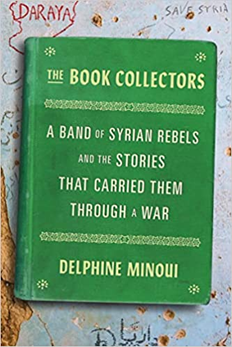
In the war-torn city of Darayya, where life was besieged by Bashar al-Assad’s regime, a small group of rebels embarked on a remarkable mission that would be a testament to the enduring power of books. This extraordinary endeavor, chronicled in Delphine Minoui’s “The Book Collectors,” is a story of hope and connection against the backdrop of unspeakable violence, deprivation, and tragedy.
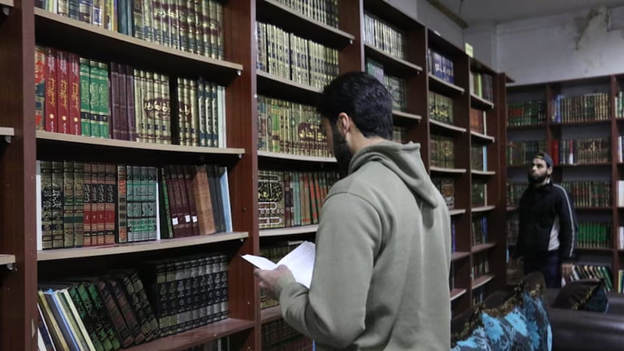
The saga began in October 2015 when a photo posted on Facebook catches the attention of Delphine Minoui, a Le Figaro Middle East correspondent based in Istanbul. The image features two young men surrounded by walls of books, a fragile oasis in the midst of war. The caption identifies it as the “secret library of Daraya.” Through meticulous sleuthing, Minoui traces down Ahmad Muaddamani, one of the founders of the library, and begins to unravel the incredible narrative of cultural resilience in the face of war.
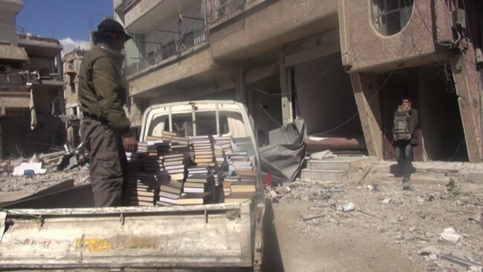
Ahmad Muaddamani, then 19 years old, had refused to abandon his hometown Darayya despite being under siege since 2012. In 2013, he and his friends stumbled upon a cache of books in the ruins of a destroyed house, sparking an audacious mission. Undeterred by the chaos of war, they discovered more books buried in the city’s wreckage and established a secret library in the basement of an abandoned building near the front line.
The library, an oasis of knowledge in a city under constant bombardment, became a refuge accessible to all of Darayya’s residents. Muaddamani passionately celebrated his cultural heritage, asserting that books were “weapons of mass instruction.” The collection, salvaged from the rubble, grew rapidly, reaching 15,000 volumes in a short span.
Minoui, communicating with Muaddamani and his friends online, delves into the lives of Darayya’s residents. She encounters Abu el-Ezz, the library director, in a makeshift clinic where he is recovering from the effects of a barrel bomb. Through the blurry computer screen, she meets other patrons of the library who share their newfound passion for literature, from love poems by Nizar Qabbani to the novels of Marcel Proust and J.M. Coetzee.
The library, described as a land without borders, became a symbol of defiance and cultural resistance. Despite the constant threat of bombing and attacks, the library provided a sanctuary where books circulated freely, offering an escape and intellectual sustenance to the young rebels of Darayya.
However, the library’s resilience was tested when it became a target of an attack. Explosives ripped through two of its five stories, scattering books on the ground, bent and wrinkled but miraculously without casualties. Muaddamani saw this as evidence of Bashar al-Assad’s hatred for Darayya and his desire to see its inhabitants dead.
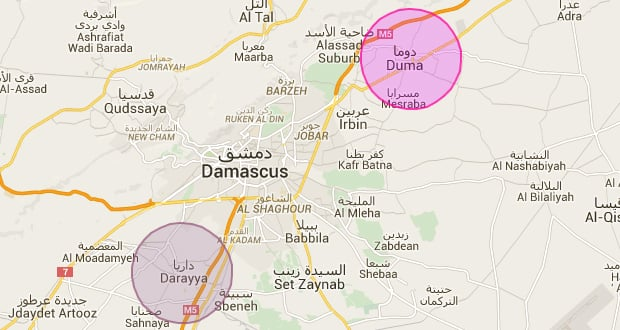
As the war raged on, Darayya –located five miles south-west of Damascus, became a city divided into three levels: the sky dominated by helicopters, the ground disfigured by bombs, and the clandestine basements nestled in the shadow of chaos. In April, Minoui received a distressing letter from 47 women of Darayya, detailing their dire circumstances of malnutrition and lack of essential supplies. The world’s response, a convoy carrying health kits, contraceptives, and glucose patches, fell short of their urgent need for food.
Despite the mounting challenges, Muaddamani and his compatriots remained resolute. The entire world, they felt, had abandoned them, and they could only count on themselves. In June, Minoui lost contact with her correspondents, learning in fragments that Muaddamani’s friend Shadi was severely wounded, and his friend Omar killed. Eventually, Muaddamani and his comrades had no choice but to abandon their beloved Darayya.
“The Book Collectors” transcends the narrative of a library in the midst of war; it is a poignant exploration of hope and connection amid unimaginable adversity. The library, with its diverse collection of books and its role as a refuge, becomes a tribute to the indomitable spirit of the people of Darayya. The story also underscores the power of literature to transport individuals, providing solace, intellectual nourishment, and a sense of freedom in the darkest of times.
In a literary landscape that includes works like Azar Nafisi’s “Reading Lolita in Tehran” and Susan Orlean’s “The Library Book,” “The Book Collectors” stands as a meaningful addition. It emphasizes the enduring importance of libraries as islands of calm and nourishment in a turbulent world, echoing the sentiment expressed by Mazen Darwish, a Syrian human rights activist, that no jail can imprison the free word. The library of Darayya, despite its physical destruction, remains a symbol of resilience, courage, and the unbreakable spirit of those who dared to dream of a different future amid the chaos of war.
 Bibliotheca Humana